
Transcript:
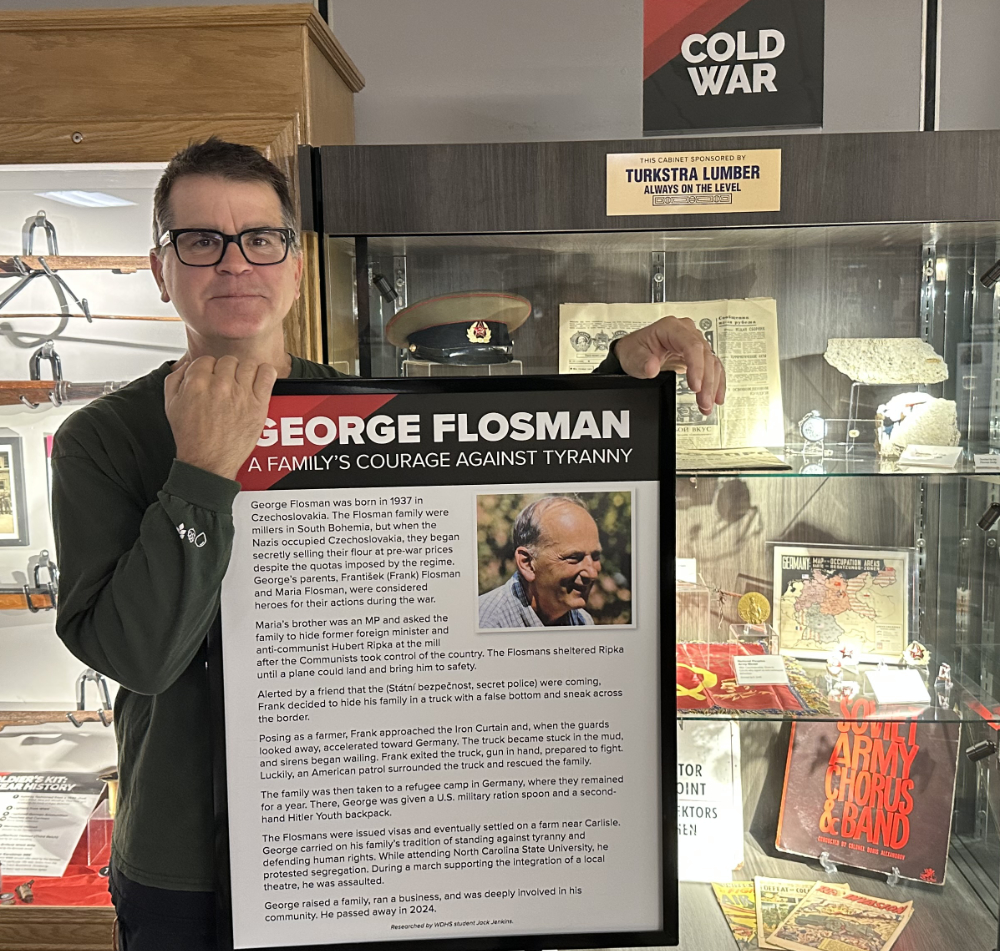
So when I was a kid, I had heard that our family had been heroes during the war and had resisted Nazis, but when you’re 8 years old, what does that even mean? And then as I was getting older, I started doing the history research and I learned that our family was very much involved in the resistance of World War II against the Nazis, and then against the communists.
What is the craziest thing, is that when I was in university, I did a paper on Czech resistance, and in there I mentioned this Minister of Foreign Affairs, and my grandmother, she took it and read it and said, “Oh yeah, that’s the guy that we hid at our mill”, and I freaked out and said, “Are you kidding me, this is the guy?” I had heard the story that we had hid a high level official at our mill for two weeks and then he flew to France and then suspicion fell on our family and, of course, they had to escape through the Iron Curtain. But I had no idea his name and it’s just a strange coincidence that I stumbled upon him.
Two years ago, my grandfather, and I’m hoping my grandmother will because she was just as much involved, but in Czech Republic the National Minister of the Interior has recognized my grandfather as a hero. My family is very modest and they never sought recognition, or they never believed they had to talk about it.
But I will say this, my father, he had mentioned when I was a kid, that he, because I was doing an essay in high school on Martin Luther King, and he said, “Oh yeah, I used to protest that when I was in North Carolina, I protested segregation.” I was more proud of that than anything because he was just a child when he escaped Czechoslovakia. When the communists started shooting at them at the border, my father thought it was a great adventure, he thought it was so cool. So when you’re a kid, it’s different, right? But I think it was his engagement with injustice that made him so dedicated to justice.