
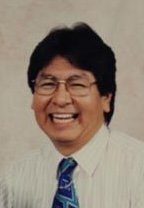
Transcript:
My father, he was proud to be a veteran. And he was proud to be Indigenous veteran, that was what he was the most proud of, that him and a few of his friends served in the army together.
I asked him that, after being in the residential school, why would you even think about joining the Canadian army? And he said, “Well someone has to protect this country.”
I was with my father a lot, and I often asked him like, “How did you learn that dad?” And he would say, “School!” And then I’d be impressed that he knew how to do just like various things, like he was a mechanic by trade and also, he was a carpenter. I thought he was one of those special people that was smart at everything that he did and that the government wanted to teach him stuff, so they sent him to a special school. That’s what I grew up thinking, because my father never explained what the residential school was. Truth and Reconciliation, when all that came out, I finally realized what my father had been talking about.
I had the five siblings, and two of them went to residential school, and my father decided that he didn’t want the rest of his family going to residential school, so we packed the car up and left, so that we didn’t have to live on the reserve, because essentially that’s where the government was getting the children. So my father thought we should not live on a reserve and hide amongst the white people.
We would move from one town and live there for 6 months, and then move to another town, live there for 6 months. From the time I was 3 years old, until I was 9 or 10, that was when we finally, finally settled down into a town that my father felt comfortable in.